
Back-to-School Eye Exams: Strategic Growth for Optometry Practices
With school starting up, it’s now more important than ever to book an appointment with a Calgary children’s eye doctor. From trendy eyeglasses to contact lenses, we have everything you need to ensure your child’s vision is clear and comfortable for optimal learning.
Vision plays a very important role in a child’s educational, physical, and social development. In fact, young students learn more using their vision than they do with any of their other senses combined. That’s why it’s so important for parents to be aware of any possible signs of vision problems in children.
Why Do Kids Need Eye Exams Before The New School Year?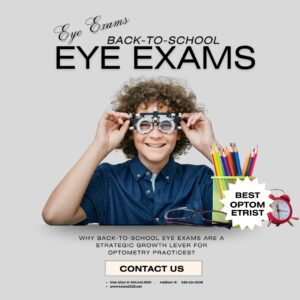
Classroom learning is up to 80% vision-based, and children who don’t see well are more prone to falling behind.
Consider what’s involved: reading, writing, seeing the whiteboard, focusing, and even following moving images on a screen. A deficit in any of the 17 visual skills necessary for optimal learning may negatively impact the way your child learns and behaves.
A few examples of essential visual skills include:
- Eye tracking
- Binocular coordination
- Convergence
- Visual memory
- Visual thinking
- Central visual acuity
- Peripheral vision
- Color and depth perception
- Visual integration
It’s important to note that diagnosing a visual problem takes the care and expertise of a pediatric optometrist. School vision screenings don’t evaluate a child’s visual skills or examine the health of their eyes.
That’s why it’s important to have a child’s eyes and vision evaluated by an optometrist every new school year, especially if they exhibit signs of visual deficits.
Why Is It Important For Children To Have Their Eyes Checked Before Heading Back To School?
Vision is critical to just about everything children do at school, from learning to social interactions and physical activity. But without an eye exam, many vision problems go undetected or get misdiagnosed. It’s vital that impairments are identified early so that children can receive the treatment, help or resources they need for success at school. Some treatments only work when the child is young, so the earlier problems are identified, the better.
How Often Should Children Have Their Eyes Checked?
For children where there is no family history of eye problems and no immediate vision concerns, a formal eye exam should be done before school entry at about 3.5 years of age, and then every one to two years once in school.
The problem is that a lot of these exams aren’t happening. Not every child has a primary care provider, and not every community has an ophthalmologist or optometrist. Some provinces and schools have a vision screening program, but this varies greatly across Canada.
In America, the school-based vision screening program was paused during the pandemic and hasn’t returned. So, it is up to parents to be vigilant and proactive about their child’s eye health. Parents will need to arrange an eye examination for their child, which is covered by provincial health plan, by speaking with their primary care provider or visiting the provincial optometry association website to find someone in their area.
What Vision Problems Are Common In Children?
The most common issues are often the easiest and quickest to fix with a simple pair of glasses, including nearsightedness (trouble seeing far away), farsightedness (trouble seeing close up), and astigmatism (blurry or distorted vision at all distances).
Other problems can include misaligned or crossed eyes, where both eyes do not look at the same place at the same time. Another condition, amblyopia or lazy eye, occurs when the eye and the brain do not work well together on one side versus the other, causing blurry vision. Both these conditions are commonly treated with either glasses, patching or surgery, but early diagnosis and treatment are key to preventing long-term challenges.
What Signs Of A Vision Problem Should Parents Watch Out For?

The physical signs can be quite obvious, for instance, if one eye wanders, points a different direction, or appears different than the other. But parents should watch for other clues such as squinting, sitting too close to the TV, complaining of headaches or tired eyes, rubbing their eyes frequently, or struggling with reading.
It becomes much more difficult to notice poor vision affecting only one eye, as people can usually adapt and manage with the other eye, allowing the problem to go unnoticed. An eye exam is often the only way to detect these issues.
Back-To-School Eye Exams; Strategic Growth Lever For Optometry Practices:
Back-to-school eye exams aren’t just a seasonal service—they’re one of the most reliable growth engines for modern optometry practices. As children head into a new academic year, parents prioritize health check-ups that support learning and performance. Vision screening naturally becomes a key part of this preparation, creating a surge in patient demand that practices can strategically use to scale appointments, boost retention, and expand long-term revenue.
For parents, the logic is simple: clear eyesight means better classroom performance, improved reading ability, stronger focus, and reduced headaches or strain. For optometry practices, this seasonal awareness creates the ideal opportunity to engage families, build trust, and convert first-time visits into ongoing preventive care.
-
Strong Patient Acquisition Channel
Back-to-school season brings in new families who may not have scheduled an eye exam for years. This opens the door for comprehensive exams, eyewear prescriptions, myopia management consultations, and follow-up visits.
-
Increased Optical Sales
Once children complete exams, many need glasses or updated prescriptions. This naturally boosts frame and lens sales—often for multiple family members who schedule their own appointments afterward.
-
Education Builds Lifelong Patients
Discussing early detection of conditions like myopia, astigmatism, and amblyopia positions the optometrist as a trusted advisor. Parents who receive clear guidance typically return annually, improving retention and recurring revenue.
-
Marketing With High ROI
Seasonal promotions—school vision packages, discounts on kids’ frames, or family appointment bundles—consistently deliver high conversion rates since parents are already thinking about school readiness.
CONCLUSION:
Back-to-school eye exams create a powerful growth cycle for optometry practices—drawing in new families, increasing optical sales, and boosting long-term retention. For clinics aiming to scale smartly, tapping into this seasonal demand is both strategic and sustainable.